
October 7, 2025 — the holiday of Sukkot, which the Jews of Ukraine celebrated to the sounds of sirens and the ominous shadows of missile attacks. The war did not stop the joy — it only gave it a different depth.
Between the Holiday and the War
In cities where the sky no longer promises peace, Jewish families still go out to the sukkah. These are wooden huts, a symbol of the wanderings of the people of Israel in the desert. But now — also a symbol of faith, that even under the sounds of alarms, a temporary home can be built where there is light.
In Dnipro, Kharkiv, Kyiv, Odesa, and dozens of other cities, 41 public sukkahs were set up. People come to them, recite blessings, holding in their hands four types of plants — lulav, etrog, hadas, and aravah. In these moments, it seems that silence is also a miracle. But sometimes the holiday is interrupted: an alarm, a run to shelter, a prayer underground. And then a return — to the light, to Sukkot, to life.
A Rabbi’s Journey of 22 Hours
Rabbi Meir Stambler, head of the Federation of Jewish Communities of Ukraine, made a trip from Dnipro to Hungary — 22 hours on the road through checkpoints, borders, fatigue. His goal — the refugee camp “Balaton Chabad”, where for the fourth year in a row, those who were forced to leave Ukraine celebrate Sukkot.
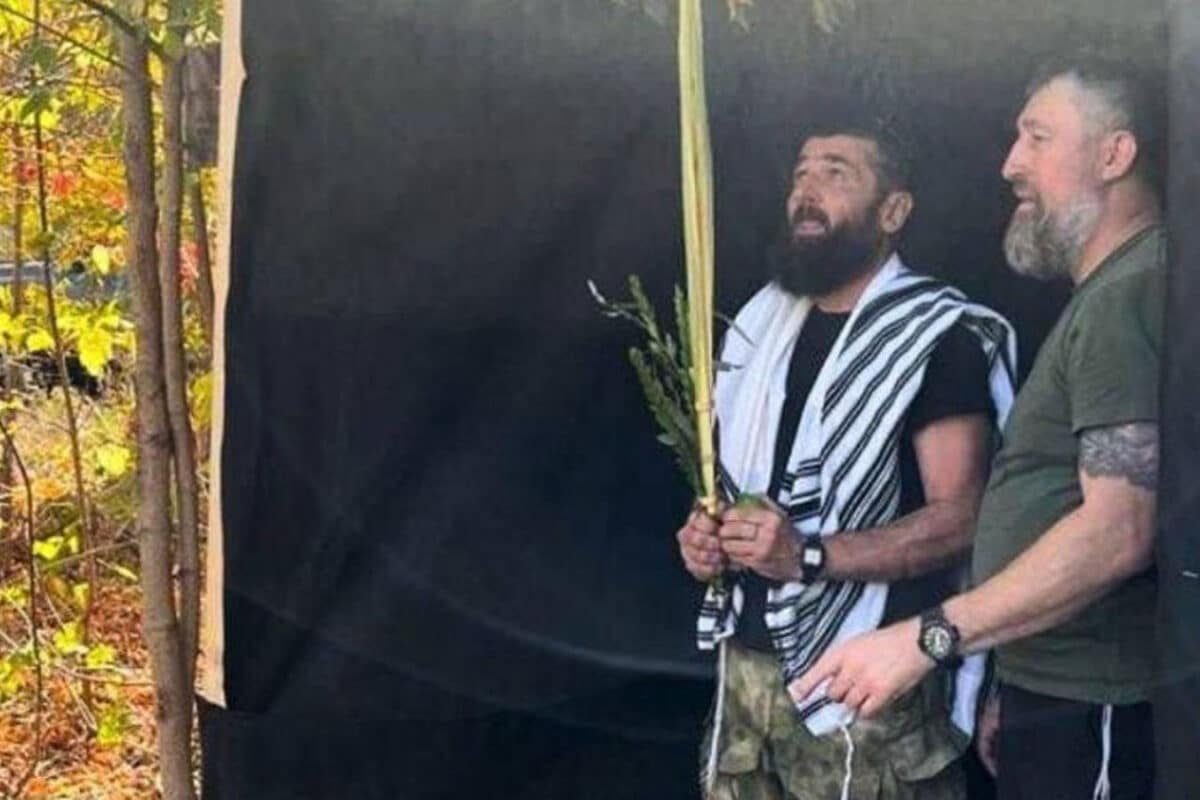
There, in the heart of Europe, gathered about 430 Jewish refugees. Among them are families who survived shelling, children born after the war began, elderly people for whom the holiday became a reminder: the people live, faith is with them.
“We build a sukkah even in exile because a Jew does not lose his home — he carries it in his heart,” says Stambler.
From Israel — with Love
Before the holiday, Chabad and the Federation of Jewish Communities of Ukraine conducted a large-scale campaign: within two weeks, they delivered sets of “four species” from Israel and rare etrogim from Calabria (Italy) to more than 40 cities.
These sacred fruits are a small bridge between Jerusalem and Dnipro, between Haifa and Lviv. They remind us that Sukkot is not only a harvest festival but also a festival of memory: of fragility, of the journey, of unity.
The Light That Does Not Go Out
While sirens sound somewhere, candles continue to be lit in Ukrainian cities. Children sing songs, women prepare meals, men pray. People build a sukkah next to destroyed homes — and this is also an act of faith.
The war divided countries, but united hearts. Israel and Ukraine — two peoples who know the price of fragility and the strength of hope.
Sukkot 5786 in Ukraine is not just a holiday. It is a statement: life goes on. Even underground, even in exile, even among ruins.
