As part of the Translate Ukraine 2025 program, 75 new translations of Ukrainian books have appeared, reports the Ukrainian Book Institute (UBI).
“We share the results of the Translate Ukraine 2025 translation support program. This year, the Ukrainian Book Institute received 161 applications for participation, 133 applications passed the technical selection, and 80 passed the expert council selection. The program resulted in 75 new translations,” says the message from UBI.
It is noted that translations in 2025 geographically covered 28 countries: Bulgaria, Brazil, the United Kingdom, Greece, Georgia, Egypt, Israel, India, Spain, Italy, Latvia, Lithuania, Lebanon, Moldova, Germany, North Macedonia, Poland, Romania, Finland, France, Croatia, the Czech Republic, and Sweden.
Which books and genres were included in the program
The translations include fiction, poetry, non-fiction, and children’s literature. The list includes both contemporary Ukrainian authors and classics, including anthologies and key texts of the national literary canon.
The program is focused not on one-time publications but on full-fledged book editions — with ISBN, national publishers, and entry into local markets.
Israel and Hebrew: an important, though rare case
The participation of Israel deserves special attention. In 2025, as part of Translate Ukraine, a Ukrainian book was translated into Hebrew — a language into which Ukrainian literature is translated very limitedly (but it is translated – ed.).
Translation into Hebrew and Israel: anthology of Ukrainian poetry and the project נְמָלָה
A project implemented in Hebrew and in Israel deserves special attention within the Translate Ukraine 2025 program. It concerns the book “Anthology of Ukrainian Poetry, Volume I: Classics (from Skovoroda to Franko)”, published in Hebrew under the title מבחר השירה האוקראינית, כרך א: קלאסיקה (מסקובורודה עד פראנקו).
The edition was carried out by the Israeli publishing house Persimmon Books Ltd (Israel) and became part of the literary initiative נְמָלָה / Nemala — a cultural project dedicated to the dialogue between Ukrainian and Hebrew literary traditions through translation.
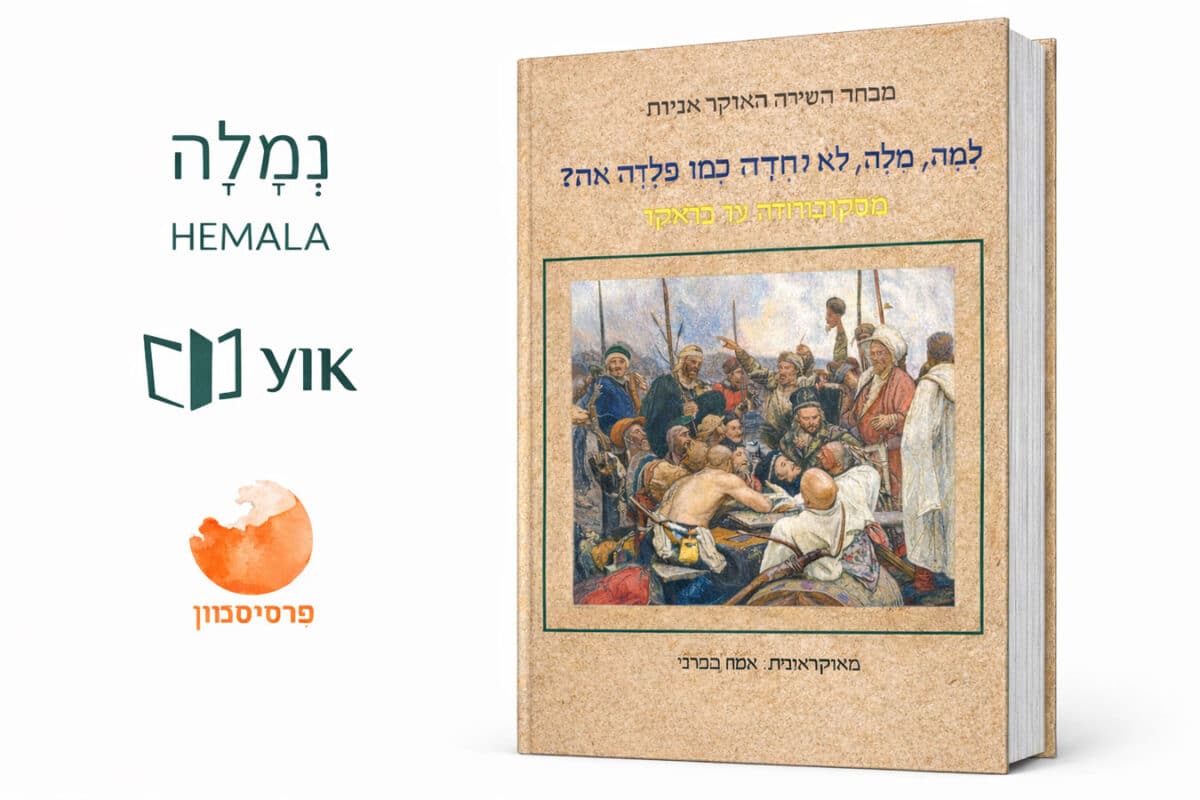
The Nemala (נְמָלָה) project is positioned as a bilingual platform and series working with poetry, classical texts, and translations that rarely enter the mass book circulation. The name combines two meanings: in Hebrew נְמָלָה means “ant,” a symbol of painstaking and consistent work, and in Ukrainian nemala means “significant, weighty.” It is in this vein that the project builds its editorial philosophy.
We have already written about the “Nemala” project:
Israeli project “Nemala נְמָלָה”: Enthusiasts connect Ukrainian and Jewish literatures through translations, creating a cultural bridge between Israel and Ukraine.
Ukrainian literature in Hebrew: how the state program “Translate Ukraine” opens new horizons for cultural cooperation.
The book by Ukrainian writer Serhiy Zhadan “הפנימייה” (Internat) was published by the Israeli publishing house “פועלים” in Hebrew: an Israeli review of the Ukrainian novel.
Ukrainian classics in Hebrew: “Every city has its own character and rights” by Hryhorii Skovoroda has already been translated by the “Nemala נְמָלָה” project as part of the Translate Ukraine 2025 program.
On October 24, 2025, Persimmon Books Ltd announced that the book “Word, why are you not a solid steel” — the first volume of the anthology of Ukrainian poetry — was printed. This is not a separate novel or an experimental collection, but a systematic representation of the Ukrainian poetic tradition of the 18th–19th centuries for the Israeli reader — from the philosophical poetry of Hryhorii Skovoroda to the classics of Ivan Franko.
The anthology includes works by authors such as:
Hryhorii Skovoroda, Ivan Kotliarevsky, Petro Hulak-Artemovsky, Marta Pysarevska, Levko Borovykovsky, Viktor Zabila, Yevhen Hrebinka, Amvrosii Metlynsky, Taras Shevchenko, Mykhailo Petrenko, Oleksandra Psel, Oleksandr Korsun, Panteleimon Kulish, Leonid Hlibov, Anatolii Svidnytsky, Osyp-Yurii Fedkovych, Mykhailo Starytsky, Kateryna Sokolovska, Mariia Volvach, Borys Hrinchenko, Pavlo Hrabovsky, Lidiia Sokhachevska, Lesia Ukrainka, Nadiia Kibalchych, and Ivan Franko.
The translation of the anthology into Hebrew was done by Anton Paperny. The book is released as a full-fledged publishing edition with an international ISBN and is aimed not only at private readers but also at libraries, educational, and cultural institutions in Israel.
It is reported that the book will be available for purchase from January 1, 2026. Pre-orders are already open — for this, the publisher offers to contact directly at info@persimmon-books.com.
For Israel, where translations of Ukrainian literature into Hebrew remain rare, this project is of particular significance. It expands the understanding of Ukrainian culture beyond the news and historical context, introducing it into the realm of poetry, philosophy, and literary classics — it is in this form that NAnews — Israel News | Nikk.Agency seeks to capture it.
The Israeli book market is small and highly competitive, and decisions on translations are made cautiously. Therefore, even one supported project in Hebrew is an indicator that Ukrainian literature is perceived not as a local or temporary plot but as part of a broader cultural and historical dialogue.
In the context of close human, historical, and migratory ties between Ukraine and Israel, such translations play a special role — they work not only with the current agenda but also with a deeper cultural layer.
What Translate Ukraine 2025 ultimately provides
75 new translations in one year is not just statistics. These are new readers, new university courses, the participation of Ukrainian authors in international festivals, and the consolidation of Ukrainian literature in the book ecosystems of other countries.
And the fact that among these languages and countries in 2025 were Hebrew and Israel underscores the importance of cultural ties that are formed not by declarations but by real books and real readers — it is such processes that NAnews — Israel News | Nikk.Agency captures when it comes to the intersection of Ukrainian culture and the Israeli space.
