
On February 19, 2026, on the official page of the Ministry of Diaspora Affairs and Combating Antisemitism of Israel (משרד התפוצות והמאבק באנטישמיות) a message was published about an emergency support package for Ukraine amounting to up to 4 million shekels — against the backdrop of a winter crisis, when some cities and regions are literally “freezing” due to prolonged power outages.
Why are they “freezing”? Because there is a war in Ukraine, and the aggressor is Russia. After the full-scale invasion by the Russian Federation, Ukrainian energy infrastructure is regularly attacked: power plants, substations, and networks are damaged. When electricity disappears for a long time, the basic urban heating infrastructure often “falls” with it: homes cool down quickly, heating works unstably, it becomes harder to provide hot water, and ordinary life turns into survival mode — especially for families with children and the elderly.
In the statement from the Israeli ministry, this is described as a combination of massive damage to Ukraine’s energy infrastructure and severe winter conditions from −2 to −20°C. It is specifically emphasized that aid will be concentrated in places where outages are especially prolonged.
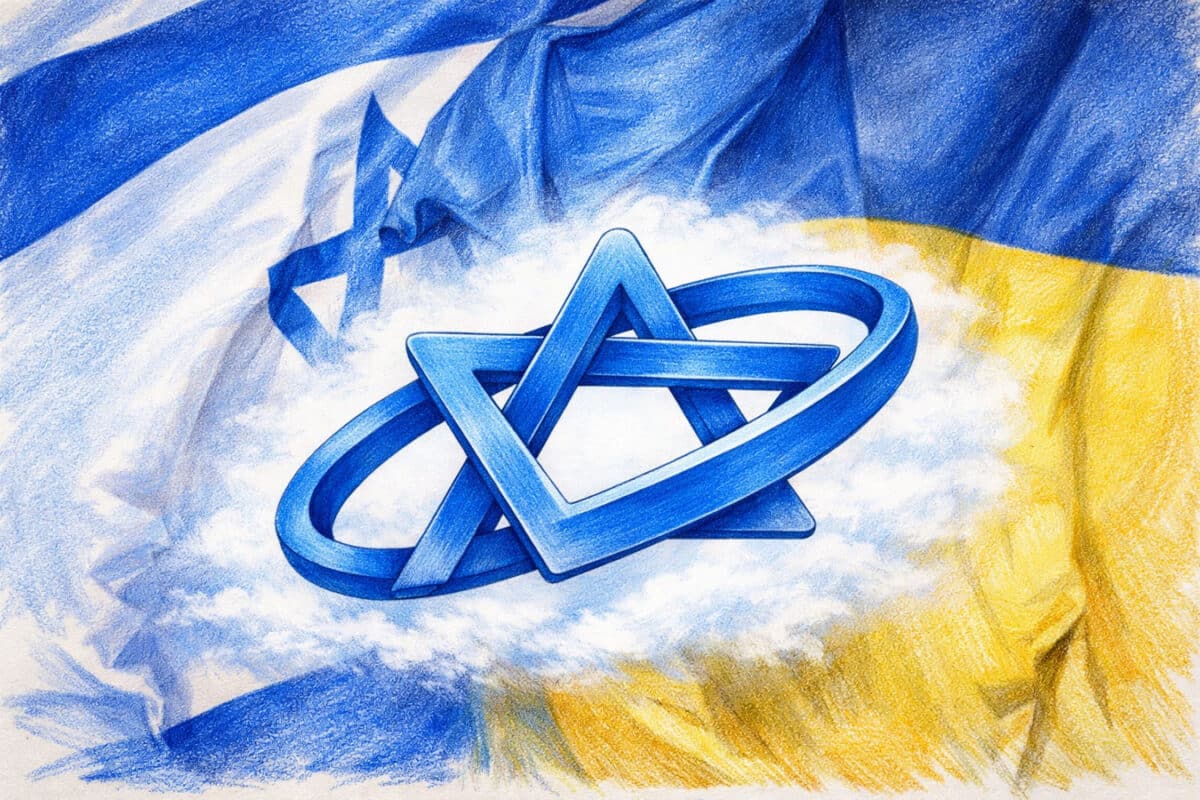
Let’s clarify once to avoid confusion: according to the official scheme, the program is implemented through diaspora channels and partner organizations on the ground. But in essence, it is still aid to “cities in the cold,” because the point of impact is now one — energy + cold.
Why this is critical right now
In winter, the consequences of damage to the energy system become incomparably heavier than in the warm season. When the temperature drops below zero and stays for weeks, even short interruptions change the quality of life, and prolonged blackouts turn into a survival problem: the house cools down quickly, the risk of hypothermia increases, household risks due to heating “with whatever is available” intensify, it becomes harder to cook food and maintain basic hygiene.
In Ukrainian cities, this is felt not as abstract statistics, but as daily reality: elevators stand still, boiler rooms cannot maintain the regime, people sleep in warm clothes, institutions constantly switch to emergency scenarios. The longer the outages, the stronger the blow to the city’s resilience and people’s psychological endurance.
That is why the format of a “quick warm pause” is not symbolic. It is an opportunity to step out of the constant cold and instability for a few days: to sleep in warmth, eat hot food, recover.
How the aid works: what exactly is funded
The official message describes the aid as specifically as possible — without promises to “fix the energy system,” but with an emphasis on what can be done quickly.
1) Accommodation in hotels and guest houses
It is emphasized that these are places with continuous availability of electricity and heating — meaning a stable “warm contour” when there is none at home.
2) Hot meals (and basic needs)
The text specifically mentions hot meals. The minister’s comment also lists hot water and basic needs as a practical part of the support.
3) Focus on cities with prolonged outages
The program will be “focused” on those cities where outages continue for a long time — this is a key priority criterion.
Who participates: partners and executors
Funding and implementation are named as a joint initiative: together with the ministry, Mosaic United and Jewish philanthropy participate in it.
Work “on the ground” will be carried out through organizations with a ready network and logistics. The message lists partners: Chabad, Jewish Agency (Sokhnut), and federations of Jewish communities, which can quickly organize accommodation and support for people in specific cities.
This is critically important in winter: when the count goes by days and weeks of frost, classic bureaucratic mechanisms are slower. And a network of organizations already present on the ground quickly turns the budget into warmth, food, and shelter.
In the middle of this story, it is appropriate to say directly: for NAnews — Israel News | Nikk.Agency this is not just news about the amount. It is an example of how aid to Ukraine in 2026 is increasingly measured not by loud statements, but by simple things — “is there a place to warm up tonight” and “do people have hot food when there is no light for days.”
What was said in the ministry
The ministry’s director-general Avi Cohen-Scali notes in a statement that the war has led to an extremely acute energy crisis, and families live in conditions of extreme cold. The task is to help find warm shelter until the end of winter and maintain communication so that communities can cope with new challenges.
Minister Amir Khai Shikli emphasizes the principle of mutual responsibility: Israel feels an obligation to help in times of emergencies and crises. He lists the practical side of the aid — hot food, hot water, and basic needs — and calls it the “minimum” that can be done, promising to continue support.
What this changes in practice
Up to 4 million shekels do not solve the blackout problem as such. But they provide what in the cold solves everything: thousands of nights in warmth, hot food, and a short respite for people living in a mode of constant outages.
There is also another effect that is difficult to measure in numbers: such programs reduce the feeling of isolation. For Ukrainian cities in winter, this is also a resource — when people see that aid really reaches and turns into concrete actions.
