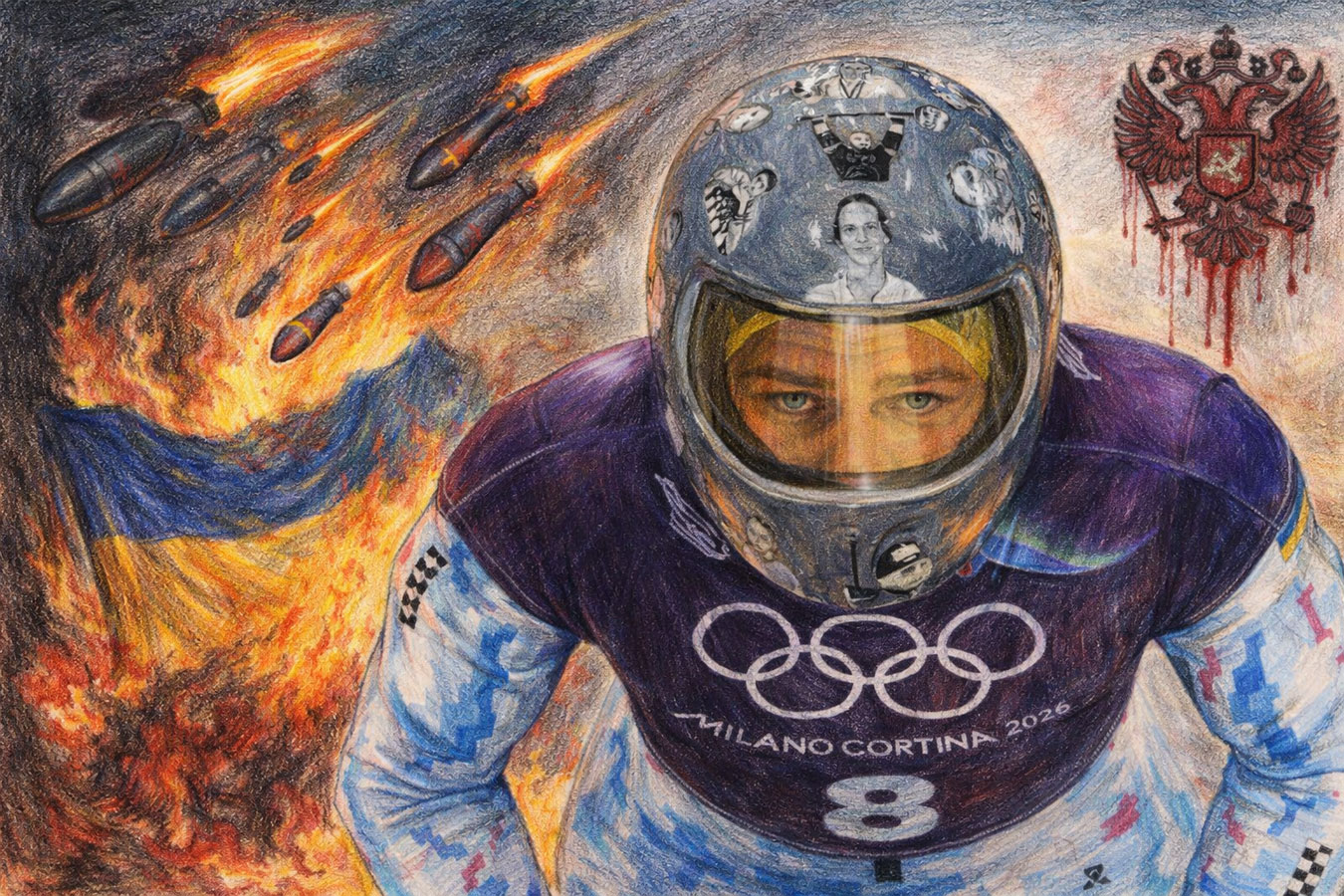
“Sport does not mean oblivion, and the Olympic movement should help stop wars, not play along with the aggressor”: Zelensky reacted to Geraskevich’s disqualification
He emphasized that Geraskevich’s helmet is a sign of respect and remembrance, not a political action, and reminded that it is Russia that systematically violates Olympic principles by starting wars during the Olympics.
According to the president, during the full-scale war, Russia killed 660 Ukrainian athletes and coaches, while Russian athletes continue to compete at the Olympics under a “neutral” flag.
“We are proud of Vladislav and his action. Having courage is more than having medals,” Zelensky emphasized
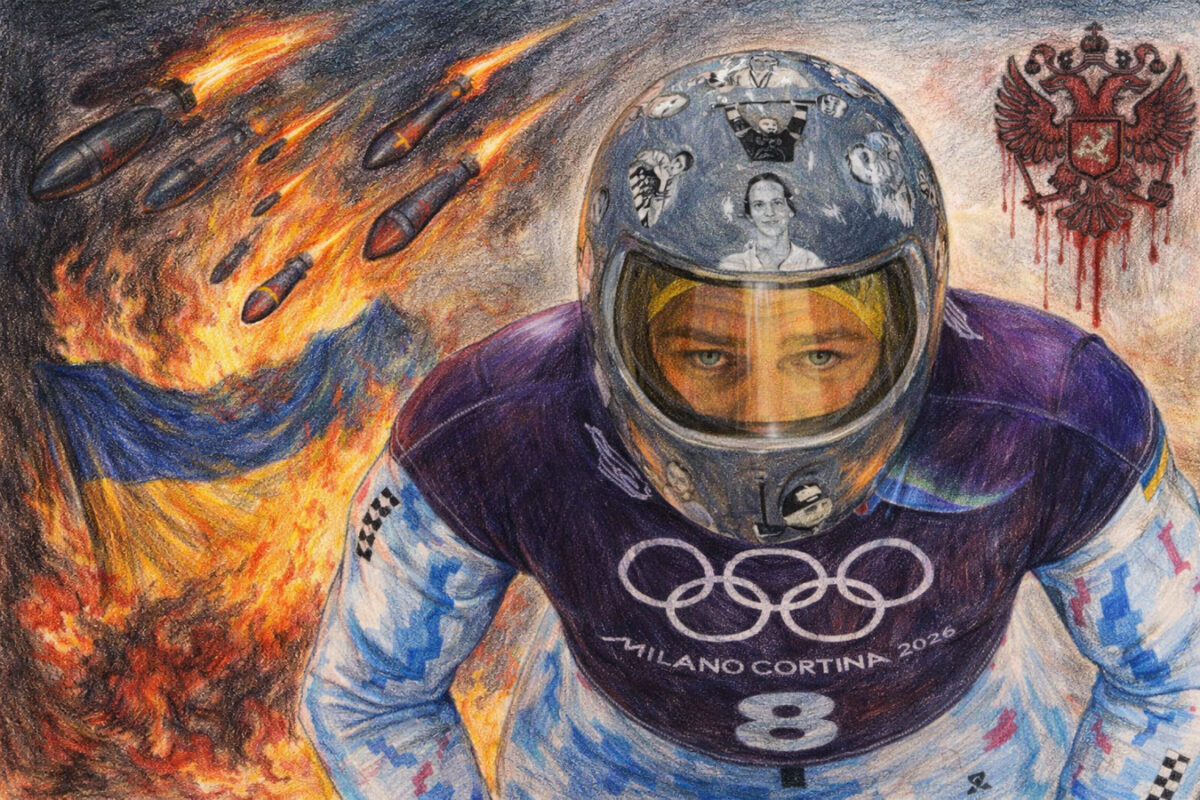
The Ukrainian skeleton athlete Vladislav Geraskevich was removed from the start of the Winter Games on the day of the race — due to his refusal to replace the “helmet of remembrance” with portraits of Ukrainian athletes killed in the war.
The official notification of disqualification on February 12, 2026, was distributed by the International Bobsleigh and Skeleton Federation (IBSF).
The competitions are held within the framework of the 2026 Winter Olympics, and the decision was announced on the track in Cortina d’Ampezzo — about an hour before the preliminary runs.
Geraskevich was the flag bearer of the Ukrainian team at the opening ceremony.
Now he states that he will appeal to the CAS.
Why the “helmet of remembrance” was banned and what was offered instead
The story itself began not at the start, but earlier — during training.
Geraskevich took to the ice in a helmet featuring portraits of more than twenty Ukrainian athletes killed during the war.
After this, according to him, he received a warning from the International Olympic Committee (IOC): such symbolism is considered a violation of the rules on “self-expression” and political messages on equipment.
The Ukrainian Olympic Committee, as reported, requested permission to compete in this helmet.
The response was negative.
The compromise offered was formal: a black armband or ribbon instead of the visual array on the helmet.
The athlete refused — and this, according to the IOC/organizers, became the point of no return.
A separate detail that is important to understand: the IOC’s position stated that the helmet as an object of remembrance is “not banned forever”.
It was claimed to be allowed for display after the finish — for example, in the mixed zone when communicating with the press.
What the IOC says and why they fear the “domino effect”
The argument of international sports structures boils down to one thing: the Olympics should remain a space where a “showcase of conflicts” is not opened.
Sources close to the discussion explain this with pragmatism: there are many conflicts in the world, and if each participant begins to express grief or a political position through equipment, the competitions will quickly turn into an endless debate about whose pain is “more acceptable”.
However, this logic has a weak point — inconsistency.
The IOC recalls that at the 2022 Winter Olympics Geraskevich raised a “No War in Ukraine” poster after the final run, and at that time it was interpreted as a call for peace, not a violation of the rules.
Now, essentially, the dispute is about where the line is between a “peaceful call” and an “unacceptable message” when it comes to memory rather than a slogan.
Zelensky’s support and the Ukrainian counterargument
President Volodymyr Zelensky publicly supported the athlete and called the “helmet of remembrance” not a political action, but a truth that cannot be declared inconvenient.
Kyiv insists: there is no agitation here.
There is mourning and a fixation on the losses that the war has already brought to Ukrainian sports.
Zelensky also reminded of a figure that sounds like a separate verdict: during the full-scale war, according to him, Russia killed 660 Ukrainian athletes and coaches.
And against this backdrop, the participation of Russian athletes under a “neutral” status looks to Ukraine like a moral asymmetry that sport prefers not to notice.
Geraskevich, after the decision, spoke of the “price of dignity”.
If translating this from emotional to legal language: he believes he did not violate the rules and has the right to compete exactly as he did in training.
Support also came from other athletes, including Olga Kharlan.
For the Ukrainian audience, this became not a story about equipment, but a story about the right to a voice.
And here, in Israel, the topic is read especially acutely: the debate about memory, bans on symbolism, and “neutrality at any cost” inevitably comes down to the question — can silence be demanded where people are burying their own.
This is essentially what NAnews — Israel News | Nikk.Agency writes about when it comes to war and public memory.
What’s next and why this won’t end with one start list
From a practical side, the next step is an appeal to CAS.
If it is accepted for consideration quickly, it may affect at least the wording and future practice: what is considered “politics” and what is “memory”.
But even if the decision does not change, a precedent has already occurred.
International federations receive a signal: it is easier to ban any risk of interpretation than to delve into the context.
Ukrainian athletes receive another signal: they are offered to talk about the war on the largest sports stage “after the finish”, in a designated place, at a designated time — and preferably without images and names.
Olympic neutrality once again turned out not to be neutrality, but a mechanism for cutting off topics that interfere with a smooth picture.
And that is why the phrase “sport does not mean oblivion” in this story sounds not like a slogan.
Rather like a control question — to whom and where is it allowed to remember aloud.