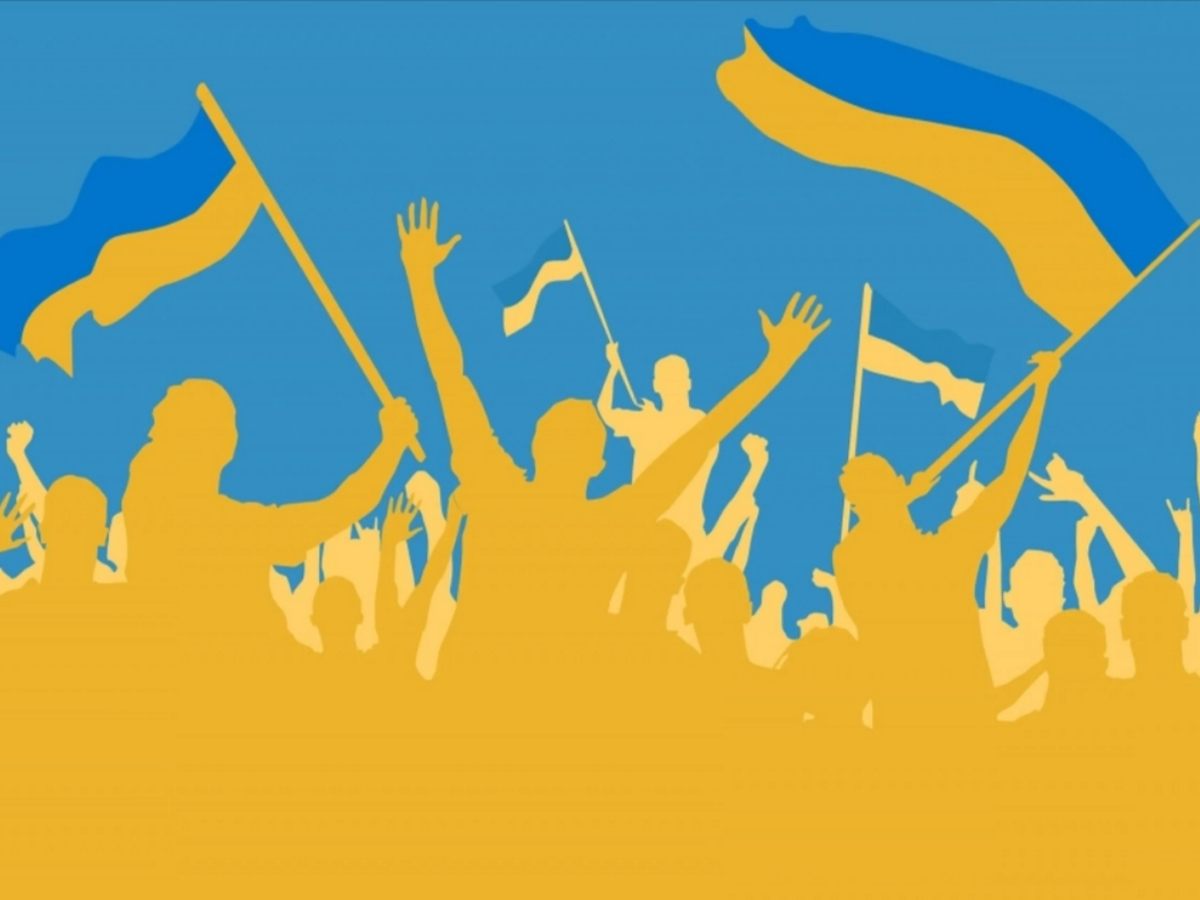
On November 21, Ukraine celebrates the Day of Dignity and Freedomrecalling events that became turning points in the modern history of the country. The Orange Revolution of 2004 and the Revolution of Dignity of 2013–2014 are not just dates, but symbols of the struggle for rights and independence.
President Vladimir Zelensky noted on this day:
“Today is the Day of Dignity and Freedom. We remember the true price of freedom for Ukraine. And let’s not forget all our people from different times who fought for Ukraine and became a model of dignity for the world.
Thanks to the people, thanks to the desire of our people to preserve freedom and independence for Ukraine, our state will always be on the political map of the world. Always free and sovereign.”
Key historical stages
1. Orange Revolution 2004
The Orange Revolution was the result of mass discontent among Ukrainian citizens in 2004 caused by fraud in the presidential elections. The main candidates – Viktor Yushchenko and Viktor Yanukovych – represented two opposing political lines. Yushchenko advocated European integration and reforms, while Yanukovych supported the pro-Russian vector.
The key moment was the second round of elections, held on November 21, 2004. According to official data, Yanukovych won. However, international observers and independent media recorded numerous violations: from ballot stuffing to pressure on voters. This caused massive discontent among citizens.
Timeline of the Orange Revolution
| Date | Event |
|---|---|
| November 21, 2004 | Conducting the second round of elections. Announcement of preliminary results, with Yanukovych in the lead. |
| November 22, 2004 | The beginning of protests on Maidan Nezalezhnosti in Kyiv. Protests are spreading to other cities. |
| December 3, 2004 | The Supreme Court of Ukraine cancels the results of the second round of elections due to massive fraud. |
| December 26, 2004 | Repeated second round of elections. Victor Yushchenko wins. |
The meaning of revolution
The Orange Revolution became a symbol of civic activism and the struggle for democratic principles. For the first time in the modern history of Ukraine, society demonstrated the ability to organize and influence the political process.
However, many of the reforms promised by Yushchenko were never implemented, which subsequently contributed to disillusionment with democratic changes.
2. Revolution of Dignity 2013–2014
The Revolution of Dignity began on November 21, 2013, when the government of Viktor Yanukovych announced the suspension of preparations for the signing of an Association Agreement with the European Union. This caused indignation among citizens, especially young people, who saw European integration as the path to a better future.
The first protests began with peaceful student rallies on Maidan Nezalezhnosti. However, the events of the night from November 29 to November 30, 2013, when Berkut dispersed the protesters with force, became a point of no return.
Main stages of the Revolution of Dignity
| Stage | Date | Characteristic |
|---|---|---|
| The beginning of the protests | November 21, 2013 | Protests of a peaceful nature with demands to sign an Agreement with the EU. |
| Dispersal on Maidan | November 29-30, 2013 | The harsh dispersal of students by Berkut caused a wave of indignation. |
| Escalation of violence | January-February 2014 | Clashes between activists and security forces, massacres. |
| Yanukovych's flight | February 21-22, 2014 | The President leaves Ukraine. Maidan is seeking a change of government. |
Key Points and Symbols
- “Heavenly Hundred”: More than 100 protesters died as a result of clashes with security forces. Their sacrifice became a symbol of the struggle for freedom.
- Automaidan: Activists in cars patrolled the streets and organized protests.
- Maidan scene: A place where politicians, activists and artists spoke and inspired people to fight.
Results
- Change of power: Yanukovych was removed from power, but this did not stop Russian aggression, which began with the annexation of Crimea and the war in Donbass.
- European course: The new government continued to move towards European integration.
- Strengthening national identity: These events became a catalyst for the formation of the modern Ukrainian nation.
Heavenly Hundred: heroes of Ukraine
The most tragic symbol of the Revolution of Dignity was Heavenly Hundred — 107 people died at the hands of security forces and snipers on Maidan Nezalezhnosti.
Shootings by snipers
On February 18–20, 2014, events on the Maidan reached their peak of violence. Snipers on the roofs of government buildings opened fire on protesters, resulting in dozens of civilian casualties.
- February 2014: The bloodiest days of the protests, with more than 80 people killed.
- February 20: One of the most tragic days, on which more than 50 activists died from sniper bullets.
These victims caused shock in Ukrainian society and the international community. In 2014, the President of Ukraine posthumously awarded the heroes of the Heavenly Hundred with the title Heroes of Ukrainewhich cemented their contribution to the freedom struggle.
Yanukovych's flight and the beginning of Russian aggression
After the bloody events on the Maidan, the regime of Viktor Yanukovych lost control of the situation.
- February 21–22, 2014: Viktor Yanukovych fled to Russia, leaving the country in a political crisis.
- February 23, 2014: The Verkhovna Rada has officially recognized that Yanukovych has removed himself from power.
This power vacuum became a pretext for Russian intervention.
Annexation of Crimea
Russia took advantage of the chaos in Ukraine and began implementing its aggressive policy.
- February 27, 2014: Armed “little green men”—Russian military without insignia—seized key facilities on the Crimean peninsula.
- March 16, 2014: Russia held a pseudo-referendum, on the basis of which it annexed Crimea, violating international law.
The annexation of Crimea prompted sanctions from Western countries and strained relations between Russia and the West.
War in Donbass
The annexation of Crimea was only the beginning of Russian aggression.
- April 2014: Russia supported the creation of illegal armed groups in the Donetsk and Lugansk regions, fueling an armed conflict.
- July 2014: The downing of Malaysian Boeing MH17, which led to the death of 298 people, became a tragic evidence of Russia's participation in the war.
- 2015: The Minsk agreements were signed, which did not lead to peace.
According to the UN, the war in Donbass has claimed more than 14 thousand peopleleft hundreds of thousands homeless and triggered a massive humanitarian crisis.
What did Russia's aggression lead to?
- Consolidation of Ukrainian society: The revolution and subsequent events awakened national identity and patriotism.
- European integration: Ukraine is actively developing cooperation with the EU by signing an Association Agreement.
- Sanctions against Russia: The international community has imposed economic and political restrictions against Moscow, which has hit its economy hard.
- Reforms in Ukraine: Events pushed Kyiv to modernize public administration, reforms in defense, economics and the fight against corruption.
Significance for modern Ukraine
Political legacy
The Day of Dignity and Freedom reminds Ukrainians of the importance of the European course and democratic values. President Zelensky noted:
“To the people, to the dedication of our people, to preserve freedom and independence for Ukraine, our state will forever be on the political map of the world.”
Economic and cultural integration
The later signed Association Agreement with the EU was the result of the people's struggle, confirming the course towards European integration.
Lessons from the Revolution of Dignity
| Event | Lesson for Ukraine | Implications for the world |
|---|---|---|
| Orange Revolution | Striving for fair elections | Democracy as a global value |
| Revolution of Dignity | The fight for rights and freedoms | An example of courage and solidarity |
| Modern war with Russia | Unity before aggression | International community support |
Red thread
The Day of Dignity and Freedom is not only a memory, but also an awareness of the price that Ukrainians continue to pay for their independence. Website “NAnews – Israel News“reminds: these events inspire not only Ukraine, but the whole world, showing that dignity and freedom are enduring values.
Today, in the face of a full-scale war, the country is again demonstrating incredible resilience, continuing the struggle for freedom and independence.
Completion
Dignity and Freedom remain for Ukraine symbols of its path to independence, and the heroes of revolutions remain an example for future generations. As NAnovosti notes, the lessons of these events are important not only for Ukraine, but also for the whole world. The memory of the past and the fight for the future make the country stronger and inspire millions.
Leave a comment in Telegram channel NAnews ↓ — Israel News