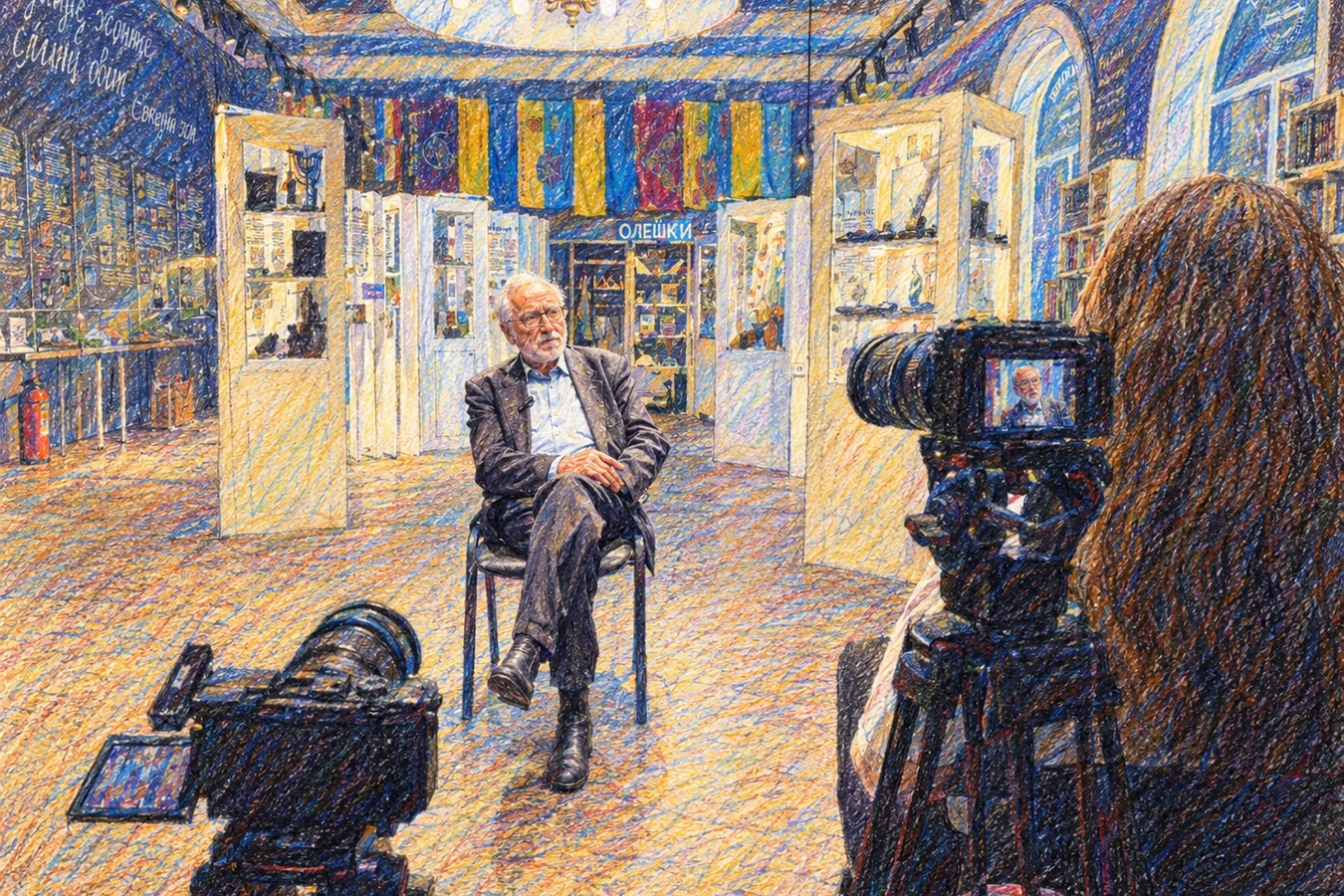
Ukrainian Jewish public figure Iosif Zisels called on Ukraine to become a “military power” and prepare for a possible new war even in the event of a truce with Russia. The human rights activist and former Soviet political prisoner told journalist Olga Lopatyuk in an interview with the Odessa publication “Intent”, published on October 30, 2026.
Author: R.Verter
Zisels is one of the leaders of the Vaad of Ukraine, an association of Jewish organizations and communities, and a participant in the Ukrainian Helsinki Group. This human rights association emerged in the USSR to monitor compliance with the Helsinki Accords; participation in it risked one’s freedom. He was arrested in 1978 and 1984; in total, he spent six years in detention.
Why he talks about Israel
Zisels calls the independence of 1991 only the beginning of state building. Democracy, law, economy, and the army, he reminds, had to be created separately. He reproaches Ukrainian leaders for underestimating the military threat for decades. Even in the 1990s, some nationally oriented activists warned of a confrontation with Russia and went to gain combat experience in Transnistria, the Balkans, and Georgia. Transnistria is an unrecognized separatist region of Moldova, where a war occurred in 1992.
For Zisels, a truce does not equal security: he fears that Russia will take advantage of the respite, and Ukraine will need to strengthen its armed forces and shift its economy to a sustainable defense basis. Against this backdrop, the Israeli example is mentioned. After the Holocaust, when about six million Jews were killed — roughly a third of the Jewish population at the time — Israel built its army, reserves, and defense industry considering the existential threat to the state. Zisels compares this historical experience with the situation of Ukrainians and provides his own estimate — 65 million Ukrainians in the world; the interview does not contain demographic confirmations of this number.
The Israeli system of reservists and mandatory military service was formed under different geographical and political circumstances. Therefore, Zisels’ comparison concerns the principle of readiness, not the transfer of the ready-made IDF model to Ukraine. NANews — News of Israel already reported on Zisels’ meeting in Tel Aviv in May 2025: he explained why he stayed in Ukraine, although part of his family repatriated to Israel.
From “Doctor Zhivago” to Ukrainian Odessa
As a schoolboy, he read Boris Pasternak’s “Doctor Zhivago,” banned in the USSR, and doubted the official account of history. He went to study physics in Chisinau because, according to his recollections, state anti-Semitism hindered Jews from entering Ukrainian universities; he later graduated from university in Chernivtsi. In the dissident environment, there were democrats, Ukrainian independence supporters, and former communists. Among the movement’s participants, Zisels recalls Oleksa Tykhyi and Levko Lukyanenko. Different programs did not prevent them from opposing the Soviet system. In 2004 and 2014, he participated in the Maidans — mass protests known as the Orange Revolution and the Revolution of Dignity. Explaining his own resilience, he recalls the Jewish concept of “tikkun olam” — repairing the world.
He calls himself a “Ukrainian Jew,” emphasizing the first word. Zisels noted a special Odessa identity back in 1999 when he gave a lecture here on Jewish identity. In 2014, he saw “Russian-speaking Ukrainian nationalism” there: defenders of the country can speak Russian, and its opponents can speak Ukrainian. He envisions the future political nation as common for Ukrainians, Jews, Russians, and Moldovans.
Hence the second comparison with Israel. Zisels recalls the debates of the late 1940s — early 1950s between supporters of Hebrew and Yiddish, the language of many European Jews, also widespread in the Moldavanka district of Odessa. In Israel, Hebrew became the state language; Arabic has had a special status enshrined in the Basic Law since 2018. Yiddish has been preserved in culture and education. The number of 200 schools mentioned by Zisels is not documented in the interview.
The conversation took place in one of Odessa’s museums. The city’s history includes Jewish cultural flourishing, pogroms, the Holocaust, and Soviet repressions. Separately, Zisels recalls the events of May 2, 2014, and concerns for southern Ukraine during the full-scale war when there was a threat of landing. In the clashes and fire on May 2, 48 people died, as established by the UN Human Rights Mission.
30 percent, Europe, and the upcoming 80th anniversary
Zisels considers the current unity of Ukraine insufficient. His assessment: 30% of adults are ready to give everything for victory; for national consensus, 70–75% are needed, and 80% would mean fundamentally different stability. These are the interlocutor’s reflections, not the results of a survey he cited. In July 2026, NANews already analyzed his thesis about “30% strong”.
He suggests not making Russian demands for “denazification” and “demilitarization” the center of the Ukrainian agenda. He associates European integration not with a request for exclusion but with the transformation of its own institutions. As a reference point, he names the Lisbon Treaty of the EU, signed in 2007 and entered into force in 2009. It regulates the structure of the European Union and is not an independent treaty on the admission of new members. At the same time, Zisels does not believe that a possible truce will itself bring lasting peace.
On December 2, 2026, he will turn 80 years old. At the end of the interview, he talks about his desire to continue public work and about his five children. When asked what should unite citizens of different nationalities and faiths, he answers: the future Ukraine, which they have yet to build.
If it is important for you to see how world events affect Israel and Ukraine, add NANews to Google and follow our publications.